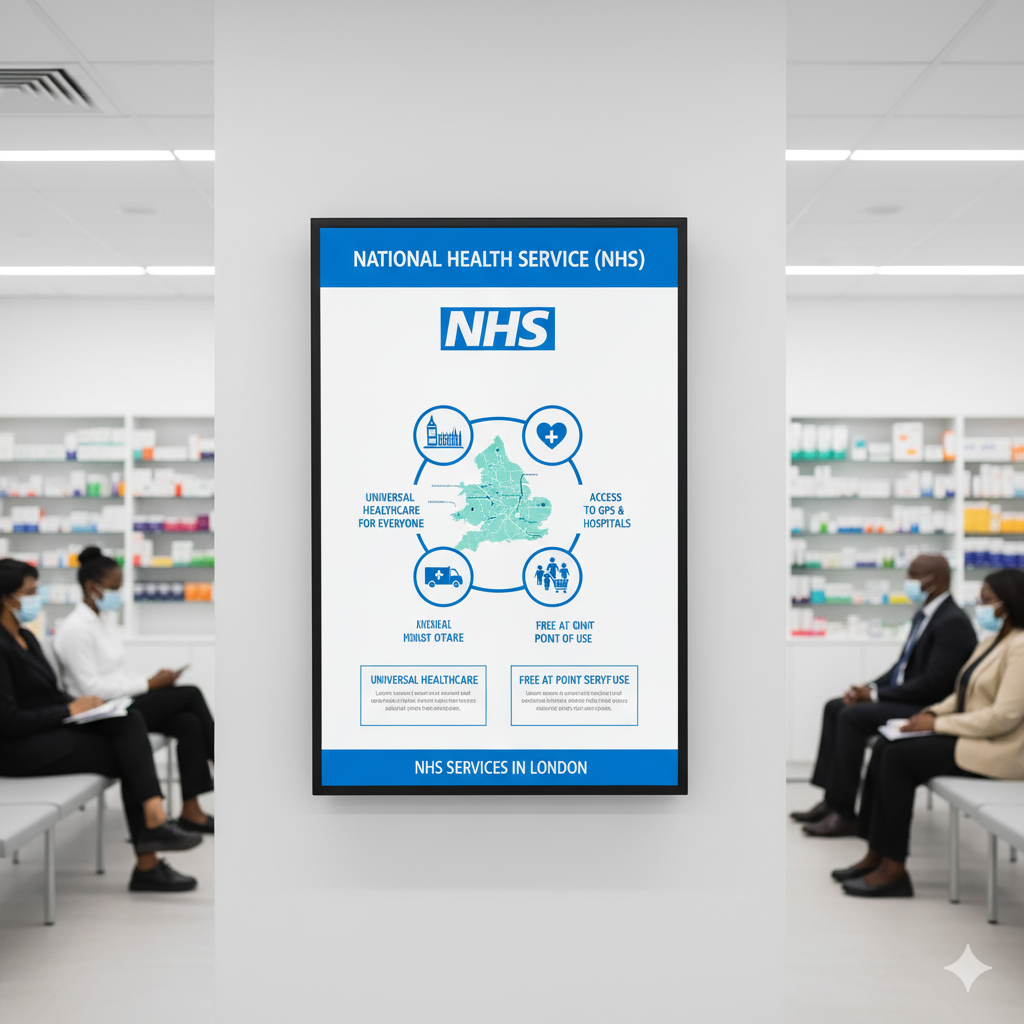
Your National Health Service: Here for You

Providing comprehensive healthcare to all UK residents, free at the point of use, and dedicated to your health and wellbeing from cradle to grave.

Funded by the public, the NHS is a symbol of compassion and care, driven by the skill and dedication of our staff to meet the needs of every patient.

Comprehensive Care

From cradle to grave

Free at Point of Use

Funded by taxation

Available to All

Based on clinical need
National Health Service - Here for You

The Principles That Guide Us

The NHS operates on a set of core principles that ensure every patient receives the best possible care.

Comprehensive Service

Providing a full range of health services, available to all residents, based on clinical need.

Access Based on Need

Care is provided based on a person's health requirements, not their ability to pay.

Highest Standards

Aspiring to the highest standards of excellence and professionalism in every aspect of our work.

Patient at the Heart

Placing patients at the center of everything we do, ensuring they are treated with dignity and respect.

Committed to your health and wellbeing.

How the NHS Works For You

The NHS is structured to provide a clear pathway for your care, from local community services to specialist hospital treatments.

1

Primary Care

This is your first point of contact. It includes General Practitioners (GPs), community pharmacies, dentists, and opticians who provide everyday healthcare and advice, and refer you to further services if needed.

Your First Step
Local & Accessible
2

Secondary Care

This level of care includes hospital services, specialist clinics, and urgent care centres. You are usually referred here by your GP or another primary care professional for expert diagnosis and treatment.

Specialist Treatment
By Referral
3

Urgent & Emergency

For life-threatening illnesses or accidents, emergency services like A&E (Accident & Emergency) and ambulance services are available 24/7. For urgent but non-life-threatening issues, call NHS 111.

Always Here
For Emergencies

Navigating Your Care

Your journey through the NHS is a clear and structured process designed for your comfort and wellbeing.

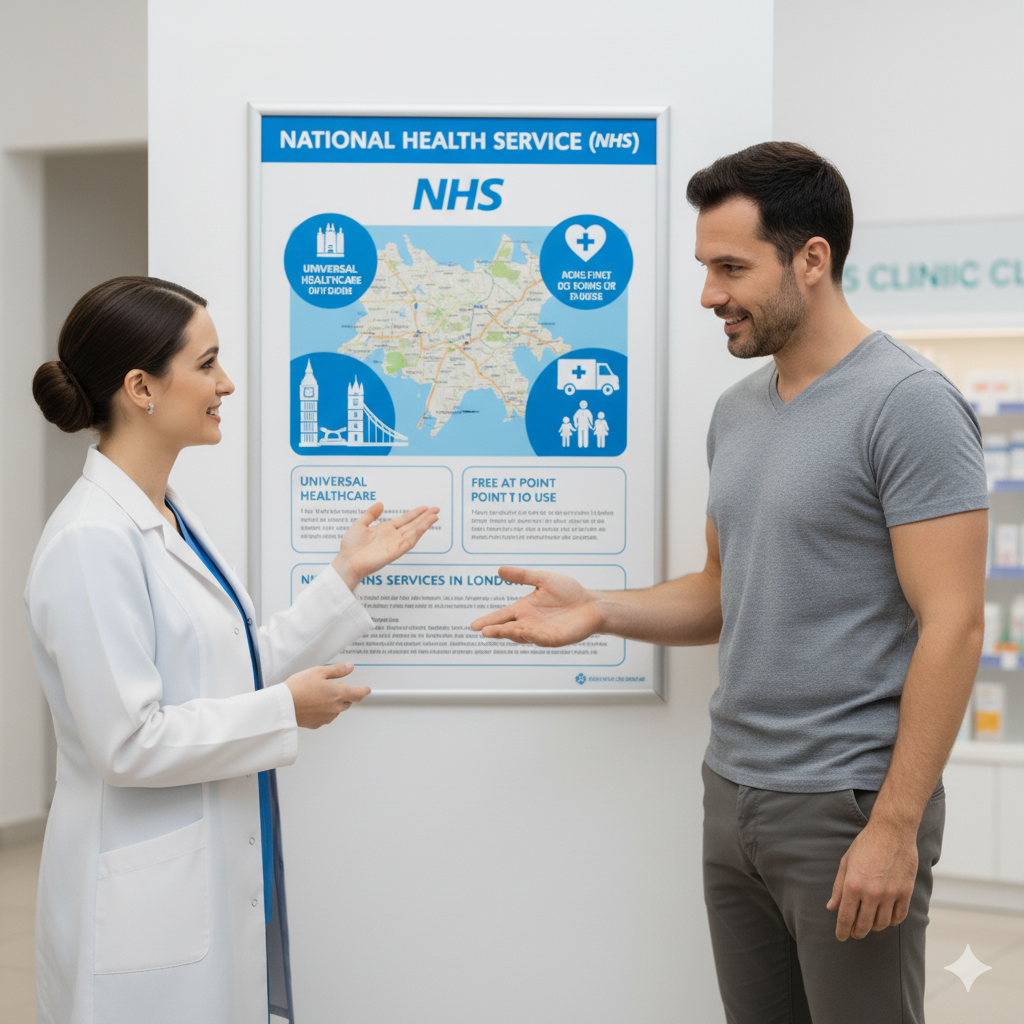
NHS GP Visit and Healthcare Services
1

Registering with a GP

Your first step to accessing NHS care is to register with a local GP surgery. This provides you with a family doctor who can manage your health over the long term and act as your gateway to other NHS services.

2

Consultation & Referral

When you have a health concern, you'll consult your GP. They will diagnose and treat many conditions themselves. If you need specialist care, they will write a referral to the appropriate hospital or clinic.

3

Specialist Treatment & Aftercare

At your specialist appointment, you will receive expert care. After your treatment, the NHS ensures you have a clear plan for recovery, including any necessary medication, follow-up appointments, or community support.

What Our Patients Are Saying

Real stories from people who have experienced the care and dedication of the NHS.

"After my accident, the care I received from the paramedics to the surgeons was second to none. The NHS saved my life, and I'll be forever grateful for the incredible staff."
Avatar of patient
David R.
★★★★★
"The midwives who supported me through my pregnancy were just wonderful. They were so kind, knowledgeable, and made me feel safe and cared for at every step. A truly amazing service."
Avatar of patient
Emma L.
★★★★★
"My GP has been a rock for our family over the years. Always listens, always has time. It's so reassuring to know that level of consistent, quality care is there when you need it."

Frequently Asked Questions

Everything you need to know about accessing and using the NHS.

Who is eligible for NHS treatment?
The NHS is a residency-based healthcare system. This means anyone who is ordinarily resident in the UK is entitled to receive NHS care free of charge. This is not dependent on nationality or the payment of UK taxes or National Insurance contributions.
How is the NHS funded?
The vast majority of NHS funding comes from general taxation. A smaller proportion (around 20%) is funded by National Insurance contributions. This model ensures that everyone contributes to the healthcare system according to their means, and care is provided based on need.
Do I have to pay for prescriptions?
Prescriptions are free in Scotland, Wales, and Northern Ireland. In England, there is a set charge per item, but many people are exempt, including children, older people, pregnant women, and those with certain medical conditions or on low incomes.
How do I find and register with a GP?
You can use the official NHS website to find GP surgeries near your postcode. Most surgeries now allow you to complete registration forms online. You do not need proof of address or immigration status to register with a GP.
What is the NHS App?
The NHS App is a simple and secure way to access a range of NHS services on your smartphone or tablet. You can use it to book appointments, order repeat prescriptions, view your health record, and get health advice.
How do I access emergency NHS services?
For life-threatening emergencies, call 999 immediately. For urgent but non-emergency medical help, call 111 for the NHS 24/7 helpline. You can also visit your nearest A&E department or urgent care center for immediate medical attention.

Stay Updated with free NewsLetter

Join the third-party newsletter to receive the latest health news, offers, and updates.

Newsletter Signup

Sponsorship
Independence
Medical Advice